
The control layer for commercial energy
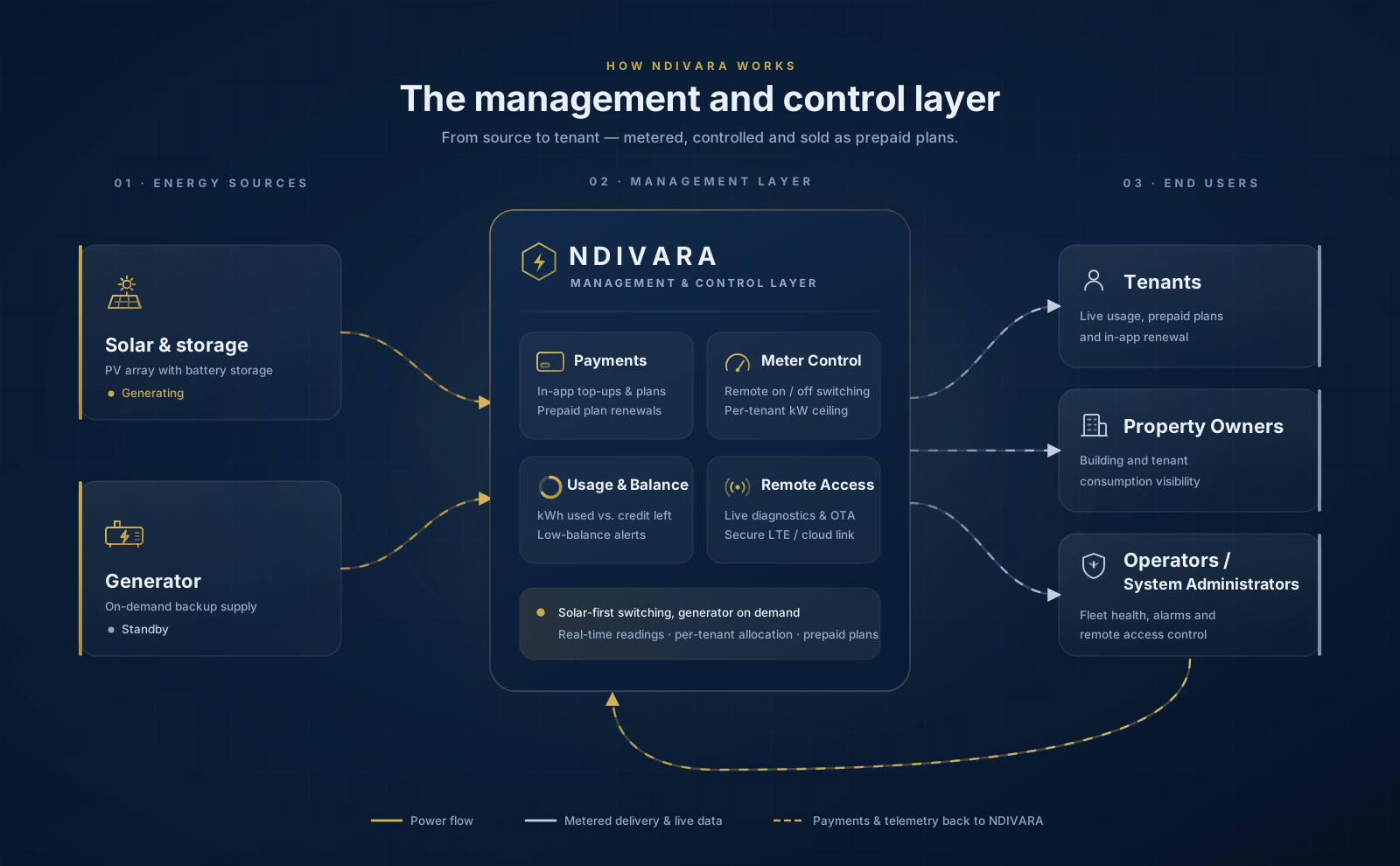
Commercial property already runs on a mix of grid, generator, solar and battery. What it does not have is a layer that measures, controls and sells what that mix delivers, tenant by tenant. NDIVARA is that layer.
How the system fits together
Power flows in from the property's sources, through the layer NDIVARA operates, and out to tenants as metered prepaid service — with payments and telemetry returning continuously.
Scroll sideways to see the full diagram.
Why this layer, and why now
Recurring by design
Each property is a portfolio of prepaid tenant plans that are renewed, rather than a one-off equipment sale.
Repeatable per property
Adding a property is a deployment and configuration exercise on the same platform, not a rebuild.
Asset-light by design
Generation stays on the property owner's balance sheet. NDIVARA earns from operating the layer that turns it into a service tenants can buy.
Aligned with a structural shift
As solar and storage spread through commercial property, the allocation and control problem gets larger, not smaller. NDIVARA is built for that problem specifically.
Where we are
NDIVARA is at pilot stage. We are qualifying commercial properties for first deployments. There is no operating history to point at yet, and we would rather say so than dress it up.
What we can do is walk through the system architecture, the deployment model and the unit economics in detail, and show you the platform itself.